THE TRAINING
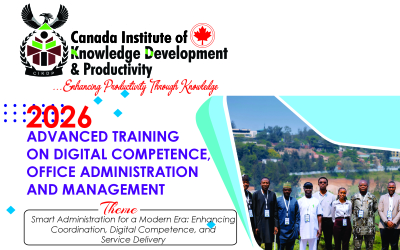
The Advanced Training on Digital Competence Office Administration and Management is a specialized professional development program designed to enhance the administrative, organizational, and coordination capabilities of public and corporate sector personnel responsible for managing institutional operations and support systems.
In today’s rapidly changing administrative landscape, institutions require skilled professionals who can handle complex communication channels, manage office resources effectively, and ensure smooth operational flow between departments and leadership structures. The program therefore focuses on upgrading participants’ knowledge in modern office practices, documentation and records management, communication protocols, digital administration tools, team leadership, and organizational ethics.
Through interactive sessions, simulations, and case-based exercises, participants will gain the technical and interpersonal skills required to coordinate administrative functions efficiently, foster teamwork, and improve overall institutional service delivery.
By the end of this training, participants will be able to:
▪ demonstrate a deeper understanding of modern administrative systems and management principles in both public and corporate organizations;
▪ apply strategic office management practices to enhance coordination, efficiency, and workflow optimization;
▪ manage official correspondence, documentation, and records using professional and digital tools for accuracy and accountability;
▪ strengthen interpersonal and communication skills for effective internal and external stakeholder engagement;
▪ utilize digital administration and information management systems to improve decision-making and operational transparency;
▪ develop leadership and supervisory competencies for managing teams and fostering workplace collaboration;
▪ apply principles of time management, delegation, and performance monitoring to achieve institutional goals;
▪ promote ethical standards, discipline, and professional conduct within administrative operations;
▪ design and implement strategies for effective service delivery, institutional image management, and client satisfaction; and
▪ build institutional resilience through continuous improvement and adaptive administrative practices.
WHO SHOULD ATTEND
▪ Administrative Officers, Executive Assistants, and Office Managers
▪ Directors and Deputy Directors of Administration
▪ Personal Assistants (PAs) and Secretaries to Senior Executives
▪ Human Resource and Operations Managers
▪ Departmental Heads and Senior Clerical Supervisors
▪ Records, Registry, and Information Management Officers
▪ Protocol and Front Desk Officers
▪ Administrative Staff from Ministries, Departments, and Agencies (MDAs)
▪ Senior Administrative Personnel from Public Enterprises and Parastatals
▪ Executive Secretaries and Program Coordinators from Development Institutions
▪ Senior Administrative Support Staff from Defense and Security Institutions
Training Modules
Module 1: Foundations of Modern Office Administration and Management
• Understanding the evolving role of administrative professionals in institutional governance.
• Core principles of office organization, structure, and communication flow.
• Building effective administrative systems for performance and accountability.
• The strategic contribution of office administrators to institutional success.
Module 2: Effective Communication and Interpersonal Relations
• Mastering official correspondence, memos, and professional writing techniques.
• Enhancing interpersonal skills and emotional intelligence in workplace interactions.
• Managing communication channels between leadership, staff, and external stakeholders.
• Conflict management and communication ethics in public and corporate settings.
Module 3: Records, Information, and Digital Documentation Management
• Best practices in filing systems, record control, and information security.
• Transitioning from manual to electronic records management systems.
• Utilizing digital tools and platforms for administrative data organization.
• Ensuring confidentiality, accuracy, and accountability in records management.
Module 4: Time Management, Planning, and Organizational Efficiency
• Prioritizing tasks and managing workload for maximum productivity.
• Applying planning and scheduling techniques for office operations.
• Delegation and performance monitoring strategies for supervisors.
• Managing multiple assignments under time-sensitive conditions.
Module 5: Leadership, Team Coordination, and Supervisory Skills
• Developing leadership qualities for administrative excellence.
• Building, motivating, and managing high-performing teams.
• Supervising junior staff with fairness, discipline, and mentorship.
• Leading through influence and promoting institutional harmony.
Module 6: Ethics, Professionalism, and Workplace Conduct
• Upholding professional integrity, discipline, and confidentiality.
• Managing ethical dilemmas and promoting accountability in office practices.
• Building institutional reputation through responsible administrative behavior.
• Encouraging inclusiveness, respect, and professionalism at all levels.
Module 7: Innovation, Technology, and the Future of Office Administration
• Leveraging ICT for improved office coordination and efficiency.
• Adopting modern digital tools for virtual collaboration and workflow automation.
• Adapting to organizational change and new administrative technologies.
• Designing institutional action plans for sustainable administrative transformation.
Organizational Benefits of Attending This Training:
• Enhance Administrative Capacity and Efficiency: Develop competent administrative professionals capable of managing office operations, logistics, and communication seamlessly.
• Strengthen Institutional Coordination: Improve collaboration and information flow between departments, leadership, and stakeholders for effective decision-making.
• Promote Professionalism and Accountability: Foster discipline, ethical conduct, and transparency in daily administrative and operational functions.
• Improve Productivity and Service Delivery: Introduce techniques that streamline tasks, reduce redundancies, and ensure prompt service outcomes.
• Integrate Digital Tools in Administration: Equip teams with ICT skills to manage correspondence, data, and records using modern office technologies.
• Build Effective Supervisory and Leadership Skills: Empower administrators to take proactive leadership roles in guiding teams and resolving workplace challenges.
• Enhance Communication and Client Relations: Strengthen written and verbal communication for professional representation and institutional image management.
• Support Policy Implementation and Strategic Goals: Align administrative activities with institutional mandates and national governance objectives.
Encourage Continuous Improvement: Establish a culture of innovation and learning within the administrative workforce
What will i learn?
Available dates
- The summit emphasizes the importance of institutional capability, leadership effectiveness, and evidence-based management as drivers of national productivity and service excellence.